
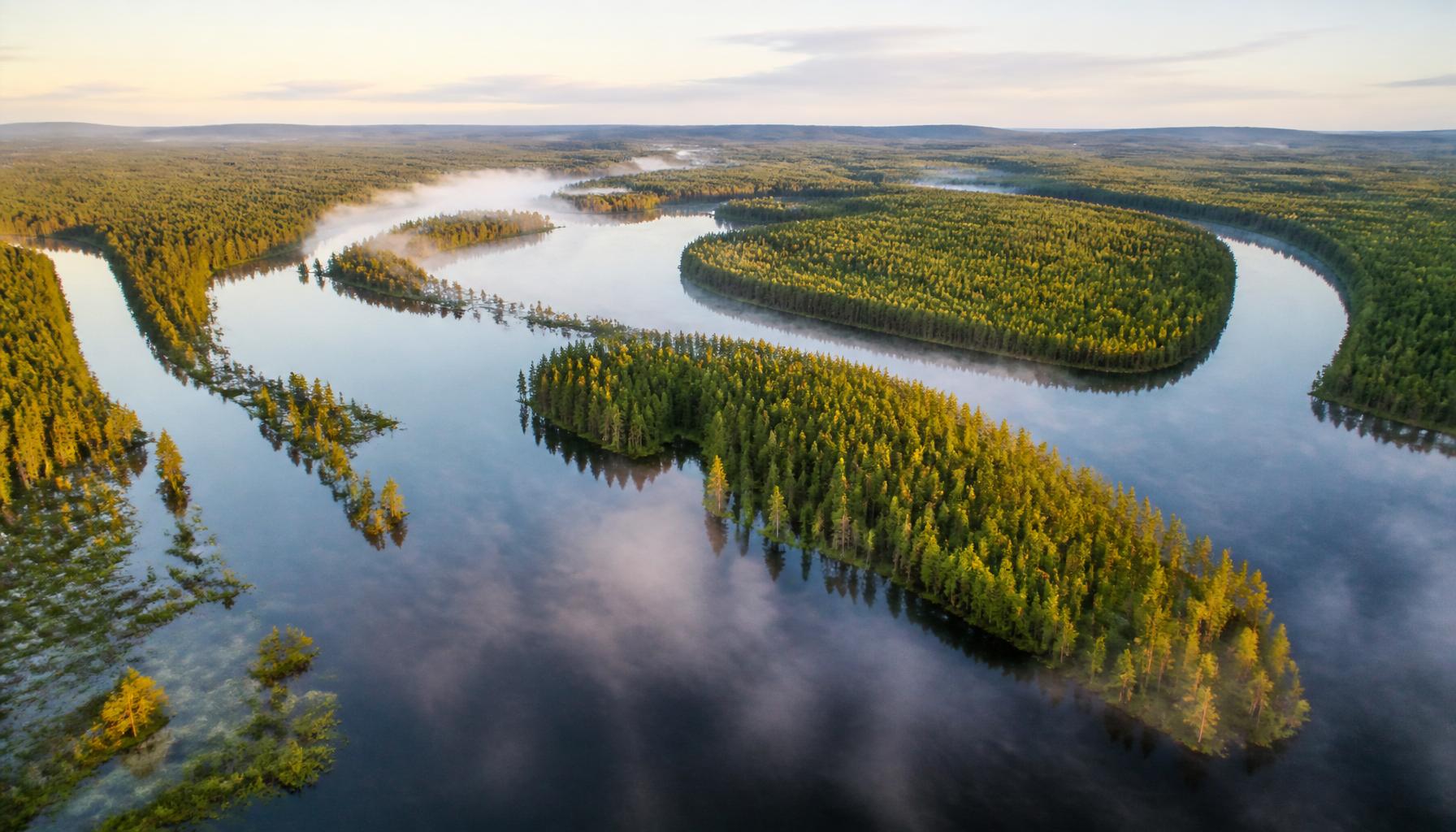
Färnebofjärden National Park aerial view

UNESCO Biosphere Reserve

Färnebofjärden National Park Guide

A complete guide to hiking, birdwatching and canoeing in one of Sweden's most biodiverse river landscapes

Färnebofjärden National Park covers 101 square kilometres along the lower Dalälven river, where the water spreads into a mosaic of flooded forests, islands, river meadows and still bays. It is a UNESCO biosphere reserve and one of Sweden's most biodiverse landscapes, the place where northern and southern species meet.

The cabin sits inside the park on Ista island, so trails, waterways and wildlife are literally at your doorstep. This guide covers everything you need to know to explore the park during your stay.

Hiking Trails

Marked trails wind through several areas of the park. At Gysinge, paths lead from the historic ironworks village through riverside forest and along the rapids. The Skekarsbo trail climbs to a lookout tower with panoramic views over the river and islands. In Tyttbo, gentler routes follow the shoreline through meadows and floodplain forest. Trails range from short family walks to full-day loops, with boards and bridges crossing marshy sections. After storms, some paths may have windfall, check current conditions at the Naturum visitor centre.

Birdwatching

Färnebofjärden is the only place in Sweden where all eight native woodpecker species can be found, including the rare white-backed woodpecker. The river wetlands attract ospreys, white-tailed eagles and hobby falcons, while the meadows host cranes, geese and waders in migration season. Early morning is the best time: walk the river shore with binoculars or paddle quietly along the reed beds. The flooded forests create perfect nesting conditions for woodpeckers, warblers and owls. Bring a field guide, over 100 species nest here.

Canoeing Routes

The calm, meandering waters of the lower Dalälven are ideal for canoe exploration. From the cabin you can paddle through narrow channels between islands, drift past flooded woodlands where trees rise from the water, and stop at small beaches for a swim or picnic. Routes range from a gentle hour-long loop around Ista to full-day trips upstream toward Gysinge or downstream through the wider bays. Two canoes and a rowing boat are included with the cabin. Life jackets and paddles are stored in the shed. The water is clean, a true wilderness experience.

Wildlife

Moose and roe deer are commonly seen in the early morning and at dusk, grazing at the forest edge or wading through the shallows. Beavers are active along the riverbanks, look for gnawed stumps and lodge dams. White-tailed eagles soar overhead, and with patience you may spot an osprey diving for fish. The park is also home to hares, foxes, pine martens and, in quieter corners, the elusive lynx that gives our cabin its name. In autumn, the forest floor is alive with mushrooms and berries.

Visitor Tips

The best months for visiting are May through September, when trails are dry and birdlife is at its peak. The Naturum visitor centre at Gysinge has maps, exhibits and current trail reports. There is no entrance fee to the park. Mosquitoes can be plentiful in June and July, bring repellent. Swimming is safe throughout the river, and the water is tested regularly. Respect wildlife by keeping a safe distance, and remember that campfires outside designated areas are prohibited. In winter, cross-country ski tracks are groomed nearby.

Stay Inside the Park

Lynx Cabin sits on Ista island within Färnebofjärden National Park. Wake up to birdsong, step straight onto the trails, and fall asleep to the sound of the river.

Check availability